
How much energy do data centers and artificial intelligence use?
Data centers currently consume approximately 1.5% of global electricity, with demand highly concentrated geographically. For AI specifically, energy consumption includes both model training and inference, though inference (running models) likely dominates total electricity use. These findings highlight three primary concerns for technical stakeholders: increased carbon emissions complicating decarbonization, local grid strain and price impacts, and potential energy constraints limiting AI expansion.

DARPA, U.S. Air Force fly AI-controlled F-16
An AI agent recently autonomously piloted a modified F-16 fighter jet during in-air testing under DARPA and U.S. Air Force’s Viper Experimentation and Next-generation Operations Model (VENOM) program. The aircraft, equipped with the VENOM Autonomy Kit, operates in a human-on-the-loop configuration, enabling scalable combat AI development for the operational fleet. This milestone builds on prior Air Combat Evolution (ACE) program
Learn OpenGL, extensive tutorial resource for learning Modern OpenGL
LearnOpenGL is a comprehensive online book and tutorial resource covering modern core-profile OpenGL, from basic setup and shaders to advanced topics like PBR, deferred shading, shadow mapping, and compute shaders. The site also includes a complete 2D game development tutorial (Breakout) with collision detection, particle systems, and audio. Written for both beginners and experienced developers, it provides clear code examples and serves as a practical reference for real-time graphics programming.

Software rendering in 500 lines of bare C++
A software renderer implemented in approximately 500 lines of bare C++ demonstrates how modern GPU pipelines (OpenGL, Vulkan, Metal, DirectX) work internally, without any third-party graphics libraries. The tutorial series covers fundamental rendering techniques including Bresenham line drawing, triangle rasterization, barycentric coordinates, hidden surface removal, camera models, shading, tangent space, shadow mapping
Writing fingerprint analysis of responses reveals Kimi's similarity to Claude
A writing fingerprint analysis comparing LLM outputs using char-trigram, word-unigram, and bigram distributions with interpolated background models reveals that Kimi’s responses are the most similar to Claude’s among tested models. The
Fairphone 6 wide camera experimental Linux support
Experimental mainline Linux support has been achieved for the Fairphone 6’s ultra-wide camera (OmniVision OV13B10), enabling QR
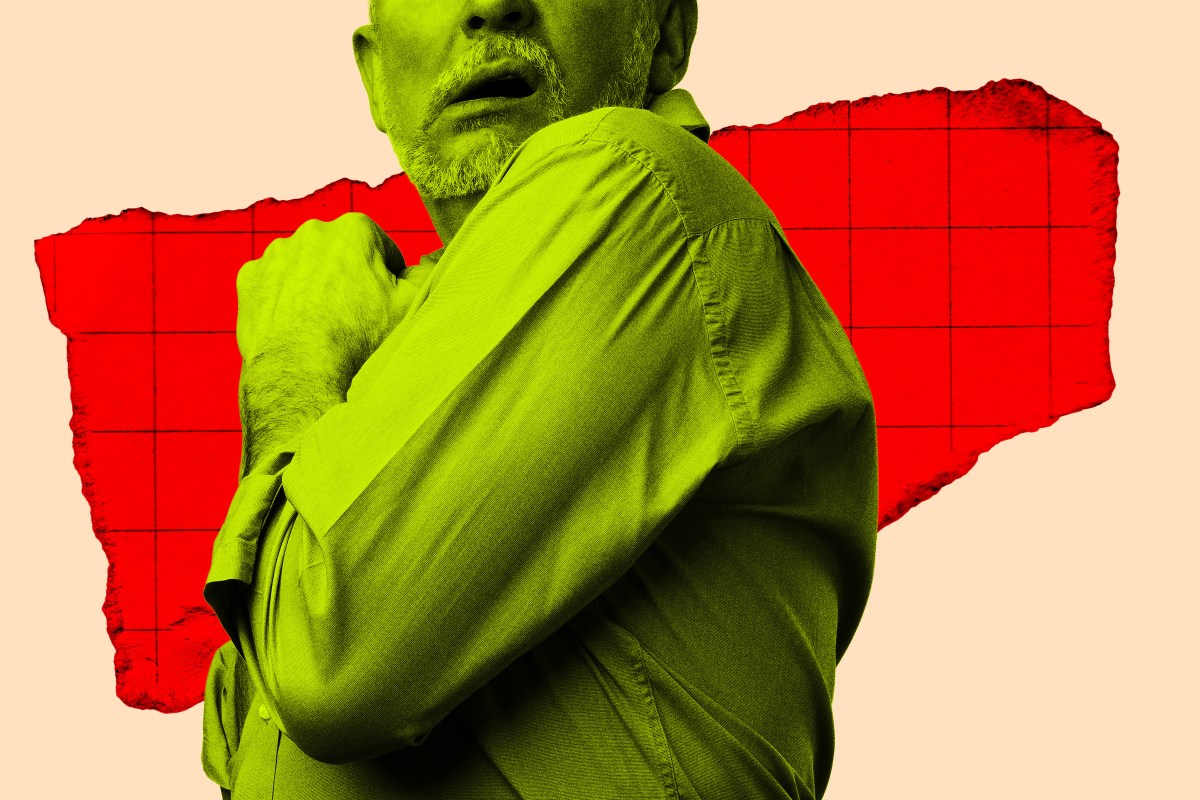
AI Companies Are Trying to Hide a Staggering Amount of Debt
A Nikkei Asia investigation reveals that five major US tech firms—Alphabet, Microsoft, Amazon, Meta, and Oracle—are concealing an estimated $1.65 trillion in debt, surpassing their officially reported $1.35 trillion. This hidden leverage stems from massive, off-balance-sheet capital commitments to build data centers needed to sustain increasingly resource-intensive AI models. The finding underscores the substantial financial risk underlying the current AI infrastructure buildout, which is funded by debt not fully disclosed to investors.
Alphabet's cash burn raises alarm for Big Tech as AI spending climbs
Alphabet's accelerating capital expenditures on AI infrastructure are fueling investor concerns about unsustainable cash burn across Big Tech. The company's heavy investment in data centers and compute resources for generative AI models is outpacing revenue growth, signaling potential downward pressure on profit margins. This trend may force
OpenAI and Anthropic unite against open-weight AI risks to their bottom line
OpenAI and Anthropic have formed an alliance to jointly advocate for policies limiting open-weight AI models, citing safety risks that could undermine their proprietary business models. Both companies, which rely on closed, API-accessible models for revenue, argue that unchecked open-weight releases enable misuse and regulatory bypass. The collaboration marks a rare alignment between the leading closed-source AI labs, shifting focus from competition to coordinated pressure on regulators

Does creatine make you smarter?
Creatine, a nutrient central to intracellular energy delivery, does not increase testosterone or cause hair loss, as these claims stem from a single discredited 2009 study contradicted by over a dozen subsequent investigations. The article argues that there is no mechanistic basis for either effect, and that any cognitive benefits from supplementation

Honey Bee Colony Monitoring via Audio IoT Sensors, Tensorgrams and RNNs
Audio-based monitoring of honey bee colony strength is improved by preserving temporal dynamics in the modulation spectrum via a novel modulation tensorgram representation, rather than discarding them as in prior handcrafted feature methods. When used as input to a convolutional recurrent deep neural network (CRDNN) and tested on the public UrBAN dataset (over 3,000 hours of hive audio), the approach achieves higher accuracy and cross-hive generalizability compared to benchmarks. The results also indicate enhanced robustness to real-world noisy recording conditions

Quality non-fiction books are the antithesis of AI slop
The author advocates for curated discovery of high-quality non-fiction as a counter to AI-generated content, describing a "vibe-coded" tool he built to surface such books. The tool emulates the serendipitous, filtered browsing he experienced as a library shelver, where the Library of Congress classification system and expert curation provided a structured path to valuable texts. The key insight is that human-cur